

Google Play Mandates Open Banking for Casino Apps


Recommended casinos
Key Takeaways:
- Google’s updated developer policy requires licensed real-money mobile casinos to integrate Open Banking APIs for user verification across European markets.
- The mandate effectively eliminates manual KYC document uploads, significantly reducing mobile onboarding abandonment and synthetic identity fraud.
- Operators have until October 2026 to update their Android Application Packages (APKs) to support the new banking infrastructure or face delisting.
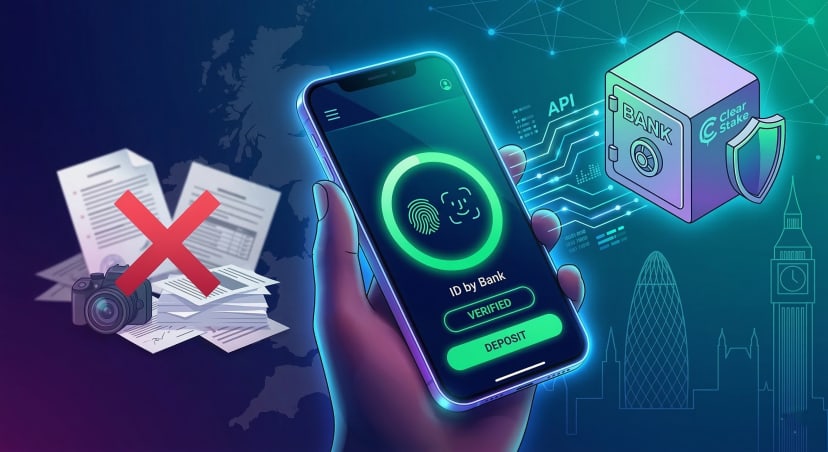
Google Play has introduced a sweeping update to its Real-Money Gambling, Games, and Contests policy, requiring all mobile casino operators in regulated European markets to integrate native Open Banking APIs for identity and age verification. The policy shift fundamentally alters the compliance architecture for Android-based iGaming applications, prioritizing operating system-level biometric security over traditional operator KYC (Know Your Customer) processes.
Historically, mobile casino developers relied on in-app document uploads—such as photographing passports, driver's licenses, or paper utility bills—to satisfy stringent European regulatory requirements. Under the newly revised Google Play directive, apps must now authenticate users directly through their native banking applications via secure API connections before granting access to real-money lobbies. By leveraging Open Banking protocols, player data is cryptographically verified by established financial institutions in real time. This automated data handshake drastically mitigates the escalating risk of synthetic identities, AI-generated deepfake documents, and underage gambling across the platform.
For mobile-focused operators, this mandate presents both an immediate technical hurdle and a long-term user experience (UX) upgrade. Manual KYC checks remain a notorious friction point in the mobile player journey, frequently leading to high checkout abandonment rates due to OCR (Optical Character Recognition) errors or clunky user interfaces on smaller mobile screens. The enforced transition to Open Banking allows players to authenticate their accounts using device-native biometric tools, such as Android fingerprint scanners or facial recognition. This streamlines the onboarding process from several minutes to mere seconds. Furthermore, the mandatory API integration natively complements accelerated mobile payment methods like Google Pay, effectively unifying the registration, verification, and first-deposit flows into one seamless action.
The enforcement phase will be systematically rolled out across primary European jurisdictions, notably the UK, Sweden, Malta, and the Netherlands. Google Play has established a rigid compliance window, granting developers until October 1, 2026, to overhaul their Android Application Packages (APKs) to support the new banking infrastructure. Mobile casinos that fail to meet the native verification standards by the deadline risk immediate suspension and permanent removal from regional Play Store marketplaces.
Industry analysts view this policy as a decisive step toward standardizing mobile casino security architectures. By forcing operators to adopt bank-grade authentication layers at the app-store level, Google is effectively neutralizing fragmented, operator-specific vulnerabilities and establishing a new European benchmark for mobile-first player protection.
Sources: